How it works
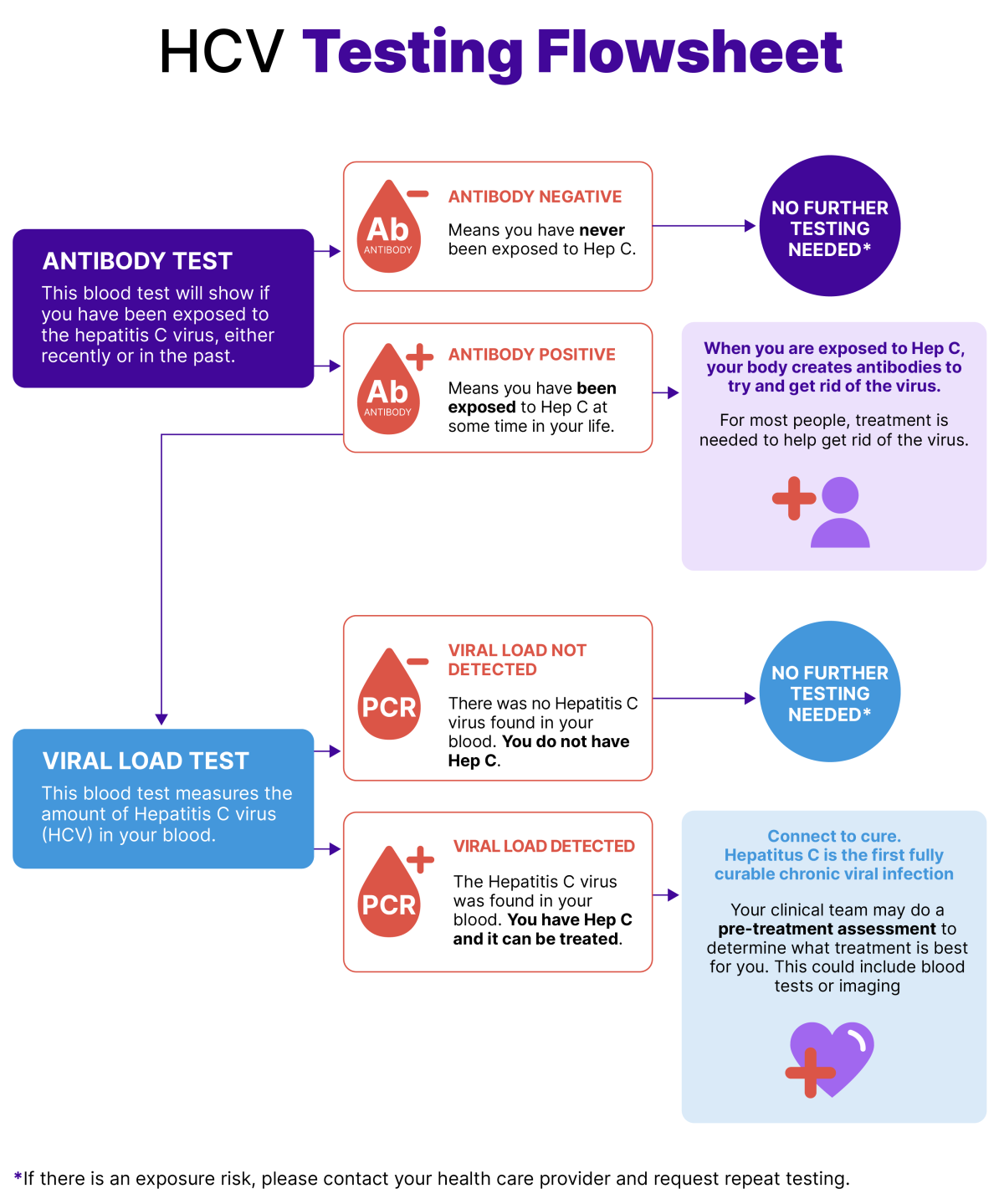
In Ontario, hepatitis C testing uses a two-step process: a single blood sample is sent to a laboratory, where antibody and viral load testing are done automatically when needed.
Step 1: Antibody test
The first type of test checks for antibodies, which tell us if you have had hepatitis C in the past.
Hepatitis C antibodies are proteins your immune system makes. An antibody test looks to see if these proteins are in your body.
- A positive antibody result means you have had hepatitis C at some point.
- An antibody test does not tell you if the hepatitis C virus is still in your body now.
- Antibodies stay in your body for life, even if:
- you were treated and cured, or
- your body cleared the virus on its own.
- Once the antibody test result is positive, it will stay positive for the rest of your life. It will not become negative, even after you've been cured or cleared the virus.
Step 2: Viral load test. Looks to see if you have the virus now.
If your antibody test is positive, the next step is a viral load test, also called a PCR test. It checks if the hepatitis C virus is currently in your blood and measures how much virus is present.
If the virus is present, you have a hepatitis C infection.
- This test checks if the virus is still in your blood.
- If the virus is there, you have a hepatitis C infection. You can be cured with treatment.
- If the virus is not there, you do not have hepatitis C.
Hepatitis C can be treated and cured. If the virus is present, your healthcare provider will work with you on a care plan for treatment and cure.
Did you know? Even if you’ve been cured of hepatitis C in the past, you can get the virus again.
You can get tested any time you think might have been exposed to the hepatitis C virus.